
A Hafiz. An M.Phil. An institutional builder. The same person.
The story of why combining Deen and Duniya is not a compromise — and why it took three generations to arrive here.
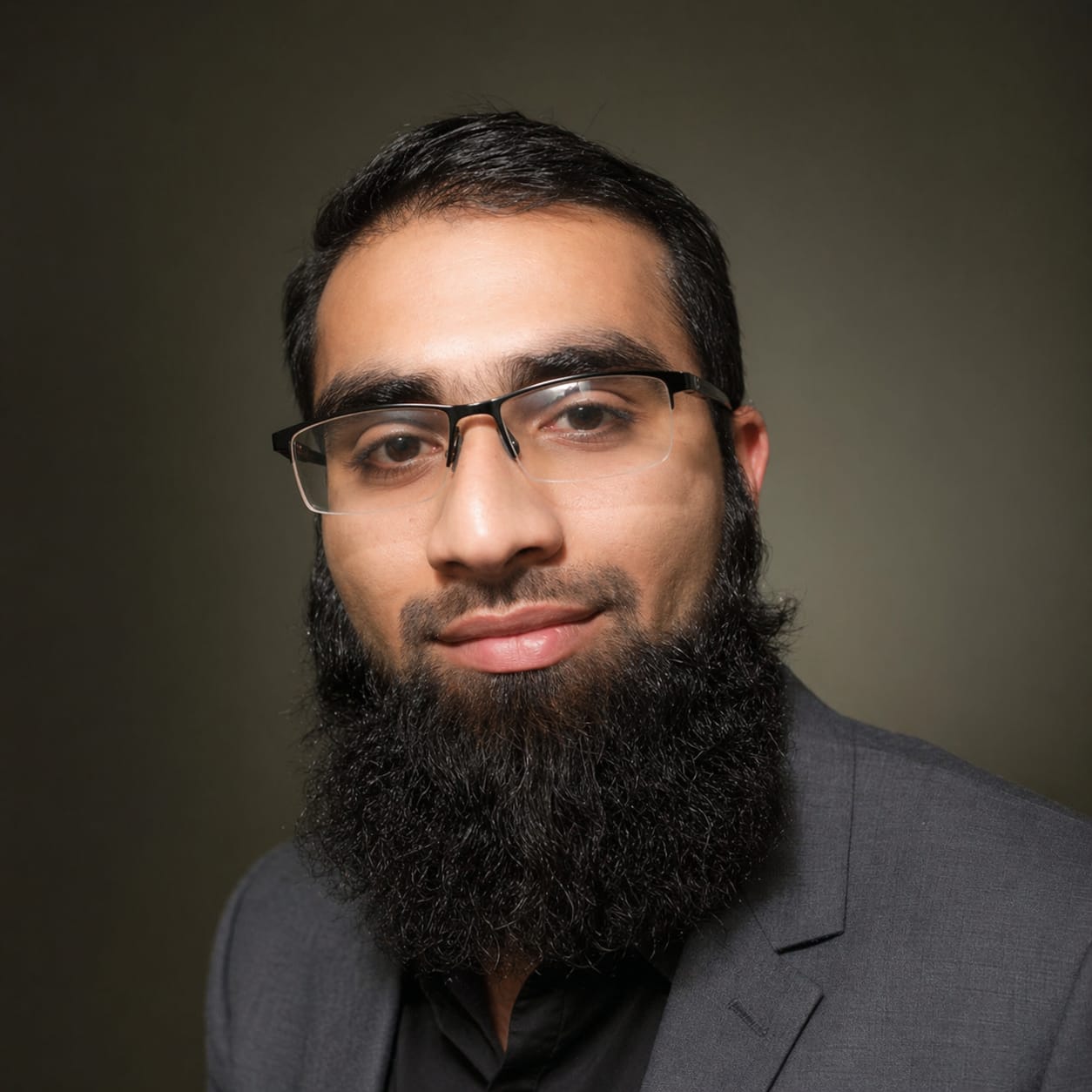
I was born into a household where the call to prayer was the family’s daily timetable.
My father, Maulana Abdul Qadir Malkani, had already founded Jamia Noman bin Sabit in Khanpur a year before I was born, in 1990. My maternal grandfather, Khateeb-ul-Asr Maulana Abdul Shakoor Deenpuri, was known across Pakistan’s religious landscape as “the Orator of the Age” — a title he earned, not claimed.
I grew up believing that a child of the madrasah was also a child of the family. In my father’s understanding, every boarding student was a son. An orphan’s education, food, and future were not a welfare case. They were a filial duty. I absorbed that posture before I had the vocabulary for it.
I completed my Hifz at Jamia Noman bin Sabit. I led Taraweeh in my father’s mosque. And then, quietly, without anyone planning it, something else began.
For ten years, I walked two roads my society insisted were mutually exclusive.
On one road, I earned a BBA in Finance and an M.Phil in Management Sciences from Bahria University. I scored a 94.53 percentile on the GAT. I interned at UBL. I trained as a Professional Accountant in Peachtree and QuickBooks. I taught Cost Accounting as a visiting faculty member at Bahria in 2017–2018.
On the other road, I remained what I had always been — a Hafiz. A son of the Deenpur Sharif lineage. A boy from Khanpur.
The tension was not abstract. I watched, year after year, two categories of my peers struggle in opposite directions. The madrasah graduates — brilliant in Dars-e-Nizami, fluent in Arabic grammar, memorizers of entire books — were locked out of the modern economy. The FSc and O-Level graduates — employable, English-speaking, IT-capable — were often disconnected from the ethical and spiritual grammar of the community they came from.
Both groups were losing. One was losing in this world. The other was losing something older than this world.
In 2018, I stepped into management of Jamia Arabia Islamia in Kirpa. I refused to inherit the template.
Within months, IT arrived. Students memorizing the Quran were now also learning English, Urdu, and Arabic typing, Microsoft Word page layout, Excel formulas, and Canva template design. A primary and matric-level formal school was grafted directly onto the madrasah so that a boy leaving at sixteen would leave with a Hifz certificate, a Matric certificate, and employable digital skills — not just one of the three.
Between 2018 and today, more than 70 students have completed Hifz under direct management. Two cohorts have completed Matric. IT labs operate daily. Teachers are being trained in modern pedagogy and human psychology.
Then 2020 happened. Like every educator in the world, I watched institutions collapse into Zoom rectangles. Unlike most, I moved first. I founded Al-Qadir Quran Academy — an online platform delivering religious education to the global Urdu-speaking Muslim diaspora, staffed deliberately by female instructors working from home.
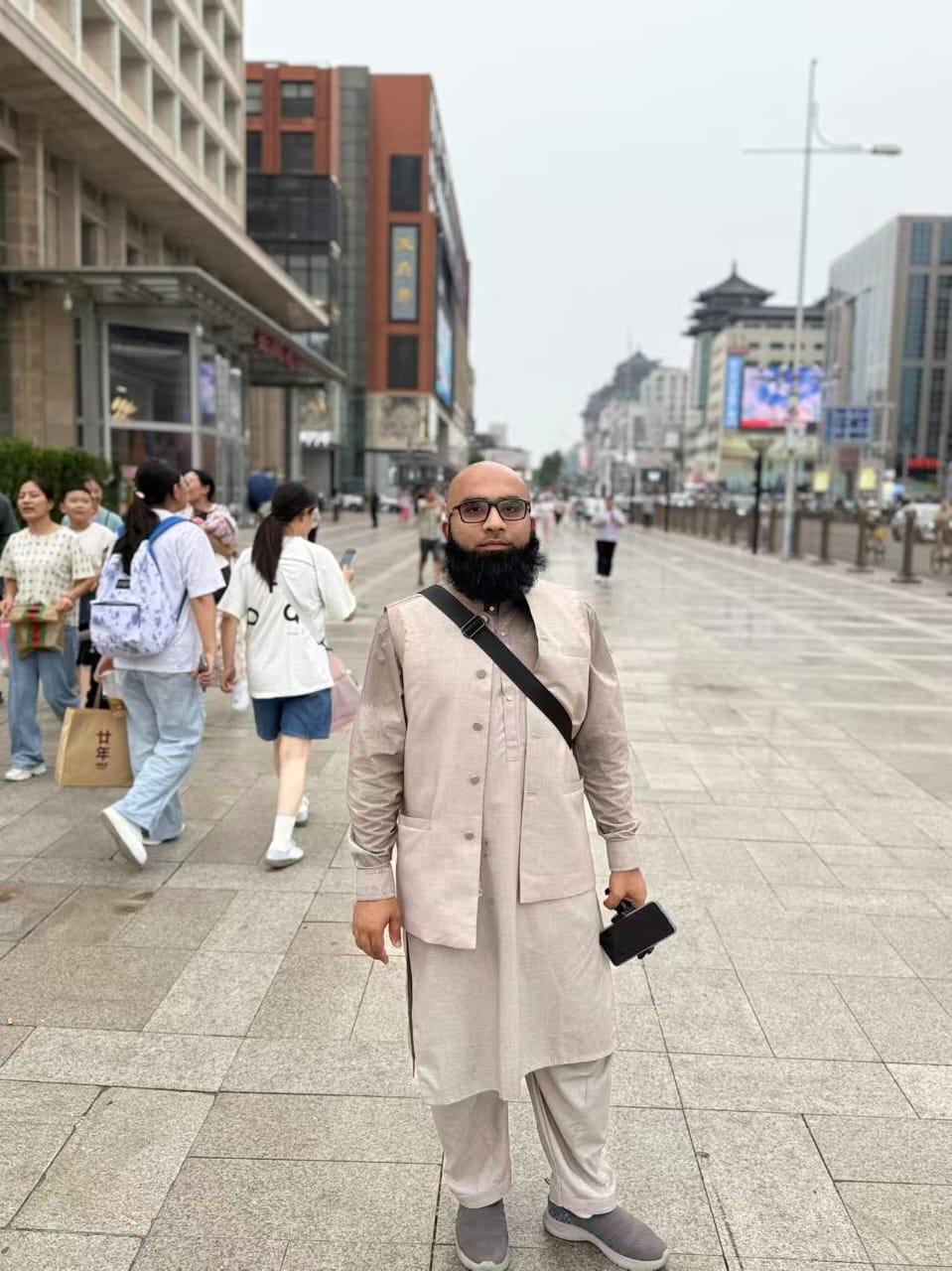
Since 2020, I have visited fifteen countries — not as a tourist, but as a student of education systems.
Hong Kong. Thailand. Malaysia. Indonesia. Cambodia. Laos. Sri Lanka. Vietnam. Singapore. UAE. Saudi Arabia. South Africa. Kenya. China. And Qatar. Each trip is now an input into what I bring back to Kirpa and Khanpur — a federal-board integration observed in Malaysia, a fundraising model tested in the UAE, a community engagement approach borrowed from a Johannesburg madrasah.
In 2022–2023 I volunteered for a full year with Acts of Kindness Pakistan, leading flood-relief operations in Zahir Pir and Chachan Sharif, orchestrating institutional medical camps for 70–80 Jamia students in Kirpa, and opening Jamia Siddiqa lil-Banat in Jatoi for girls.
Today, all of this work is being formalized under the Unity Aid Foundation — a family-led umbrella organization where I serve as CEO, and where my physician siblings, my commercial-real-estate brother, and my scholarly father each contribute a specialized vertical: Health, Education, Commercial Skills.
The struggle I watched as a boy — madrasah graduates trapped in poverty and FSc graduates trapped in spiritual amnesia — is now the problem my entire life infrastructure is organized to solve.
For those who want the resume, here it is.
Deen
- Hifz-e-QuranJamia Noman bin Sabit
- Taraweeh ImamKhanpur
- Imamat & KhitabahFriday, Eid prayers and Islamic speeches
- Deenpur Sharif lineageThree-generation scholarly chain
Duniya
- M.Phil, Management SciencesBahria University (2016)
- BBA, FinanceBahria University (2014)
- GAT (Management)94.53 percentile
- Information Technology DiplomaJoher Institute (Grade A+)
- Professional Accountant TrainingPeachtree, QuickBooks
- Visiting FacultyBahria University (2017–2018)
- UBL Banking Internship2016
Want the complete 30-page profile — including the legacy documentation, academic credentials, global travel log, and Vision 2030 strategic roadmap?
Download the full profile (PDF)My job is not to end this work. My job is to hand it to the next generation in better shape than I received it.
My grandfather built orators. My father built an institution. I am building the curriculum for the next 36 years. My children’s work will be different again — and that is exactly as it should be.
If any of this resonates with you — as a parent, a donor, a peer, a student, or someone simply curious — there is a next step on this page, and a next conversation to be had.